
CONGRATULATIONS! YOU GREW SOME INDIGO PLANTS!
NOW WHAT THE HECK TO DO YOU DO TO GET THE COLOR OUT!?
First things first, it kind of depends what you mean by “indigo”!
Chances are, you have grown one of a handful of plants that contain enough indigo to actually work with. If you got your plants from me from seeds or at a giveaway, then you’re either growing Persicaria tinctoria OR Indigofera suffruticosa OR Isatis tinctoria or a little bit of each. The methods I’m mentioning here apply to the processing of the LEAVES ONLY on these plants. Other indigo species contain pigment in other parts of the plant, but these are LEAF ONLY, baby.
This page is meant to point you toward a whole bunch of different resources for information about indigo pigment extraction. For the sake of organization, I’m going to break down extraction options into three different categories in order from simplest to most complex: first - direct indican dyeing, second - aqueous extraction of indigotin, third - dried leaves and composting extraction.
I’ll say it now (and say it again later), in my opinion, the best, English language published single source of practical information on many of the processes mentioned on this page is actually a publication by John Marshall titled Singing the Blues: Soulful Dyeing for All Eternity. So, if you’re looking for information to demystify the process, start here:
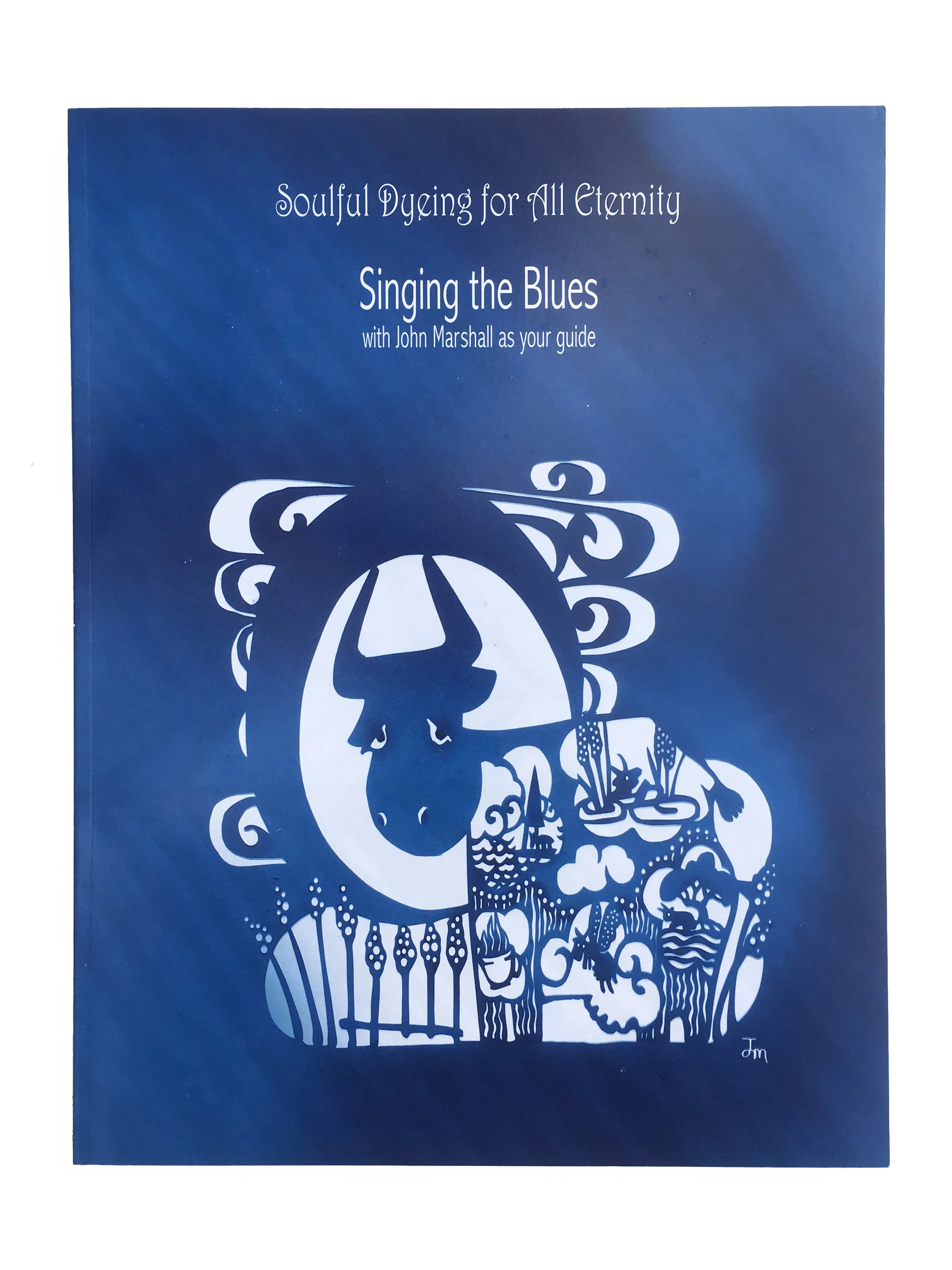
This is the best practical indigo dye book I've ever seen.
I'm grateful to John Marshall for publishing such a thorough, well researched and thoroughly tested gem!
First published in 2018, this book covers indigo dyeing from the seed all the way through multiple forms of extraction and dyeing and gives in-depth instructions for each step.
Drawing on more than a half century of personal experience, John Marshall has created a tome of timeless information, presented concisely for our times : rich in content, photographs, chemistry, anecdotes and humor.
Pick this book up for anyone who has a serious interest in deepening their understanding of the age old art of indigo dyeing.
This soft cover book measures 8.5" x 11" x .25" and is 90 Pages.
Domestic shipping via USPS First Class Mail is $3.50, select shipping upgrade to Expedited Shipping for fastest delivery available.
For international shipping options we invite you to visit our Etsy store: https://www.etsy.com/shop/GrahamKeegan
I’m going to throw a bunch of similar words at you which can be confusing but they have different meanings and different uses but it is helpful to know the difference so here we go :
INDICAN - This is a molecule produced within certain plants that CAN be used directly to dye protein fibers.
INDOXYL - An intermediary molecule which easily converts to indigotin in the presence of oxygen.
INDIGOTIN and INDIGO - Used interchangeably, referring to the oxidized pigment molecule which CANNOT directly dye fibers, but requires dissolution and reduction in alkaline solution (called a vat) to be able to penetrate and adhere to cellulose (plant) or protein (animal) fibers.
1. DIRECT INDICAN DYEING
FOR DYEING DIRECTLY ONTO SILK AND WOOL FIBERS
This is the most simple means of extracting pigment from indigo leaves. For those of you who have seen a indigo leaf, you may have noticed that it is not blue! That’s because there is not actually ‘indigo’ in the leaf but actually two precursor molecules that need to combine to form indigo. Sometimes, when the leaf is bruised, frostbitten or bug-bit you’ll notice that portions of the leaf DO turn blue. This is because the cell structure of the leaf that normally keep the two indigo ingredients separated has been ruptured, allowing them to combine and (in the presence of oxygen) form indigo.
The two ingredients are Indican and an Enzyme that digests indican. Indican itself is water soluble and actually able to dye protein fibers (silk, wool, spider webs, eggs, vicuña fur, porcupine quills, what have you!) But it is typically short-lived once it is smashed or soaked out of a leaf because it is quickly digested by the enzyme into another molecule which does NOT dye fabric in the same way. Direct indican dyeing works within the limited amount of time that the indican exists (in our oxygen rich atmosphere). There are a couple methods of effectively slowing the enzyme so the dyer has a longer time to work with this pigment.
HAPAZOME : DIRECTLY COMPRESSING LEAVES ONTO FABRIC
John Marshall covers this process in Singing the Blues
SALT RUB DYEING
Here’s a great video by Ryoya Takashima which covers the process from start to finish.
ICE COLD FRESH LEAF EXTRACTION
John Marshall covers this process in Singing the Blues
Here is a nice Turkey Red Journal article on dyeing wool.
Liz Spencer has a lovely post with photographs.
2. AQUEOUS EXTRACTION OF INDIGOTIN
TO CREATE INDIGO EXTRACT WHICH CAN BE STORED INDEFINITELY AND ACTIVATED IN VATS TO DYE ANY TYPE OF FIBER
There is some good DIY scale discussion happening on a Facebook page called Indigo Pigment Extraction Methods.
On Instagram people are posting under the #indigoxtraction2019 #indigoextraction2018 #indigoextraction2017 about their own extraction processes and outcomes. Lots of good photo-rich information there.
Here’s a tantalizing preview (START AT 2:40) of aqueous pigment extraction from Woad by Michel Garcia. I can vouch for the full DVD, it is very thorough and inspiring and is available here.
Fibershed covers the process in their publication The Production of Indigo Dye from Plants.
3. DRIED LEAF EXTRACTION
TO BE STORED INDEFINITELY AND ACTIVATED IN VATS FOR DYEING ANY TYPE OF NATURAL FIBER
COUCHING OR SECONDARY COMPOSTING
I don’t currently know of any good online resources for this process. If you know of any, please let me know!
SUKUMO PRODUCTION
FINALLY, there is a good book on how to make SUKUMO from leaf to vat.
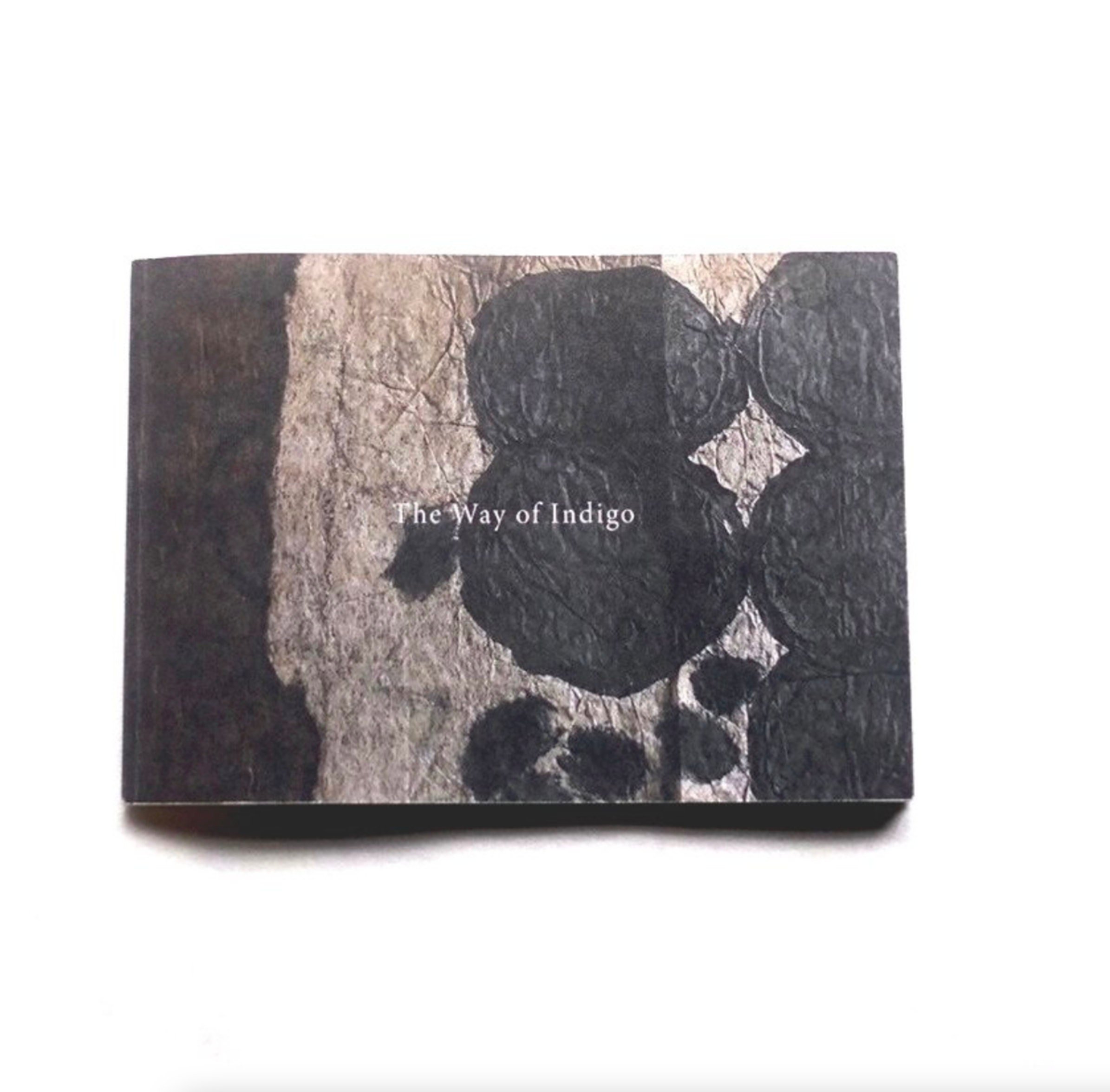
I’ve been waiting for this book for 15 years. During my earliest experiences with growing indigo in 2007, there was very little published material, either in print or on the internet about processing the plants into usable pigment. I remember harvesting a giant bundle of plant material, it was Persicaria tinctoria blue leaves and brown stems after the first frost in September and just wondering: “HOW, how do I get that color out from the leaves and onto fabric?”. In the end that year, I did nothing, lamenting tossing the whole thing onto the compost pile and it STILL eats at me that I could have saved and used those leaves.
In the subsequent years, many wonderful natural dye books have been published but there was still a gaping hole in the publication record for this precise subject. Luckily for us Takayuki Ishii has devoted the time and effort into cataloging the process of making small batch sukumo. And its in ENGLISH to boot!
This book has a laser focus on a single subject : transforming Persicaria tinctoria leaves into a sukumo indigo dye vat. If you have any interest in that subject, this is THE book for you. It is slim but mighty - packed with hand-drawn illustrations and photographs of the process that instill confidence and shed light on the enigmatic process.
I’ve been saving leftover batches of leaves from my indigo grows for the past few years and will be working my way through the process this fall when I can add the remainder of this year’s leaves to my pile!
The biggest challenge of this book is the price point! The $110 tag is nothing to scoff at, but I believe it money well spent. The information alone - aside from being available in such detail nowhere else - is thorough, clearly organized and well presented. The book is self-published by the artist and imported to the US from Japan.
I already treasure my copy as I hope you will yours!
Graham Keegan
----------
From the author Takayuki Ishii:
“This book illustrates an innovative method of producing Sukumo (fermented indigo leaves) and indigo dyeing vats from a small quantity of leaves, an approach that has never been explored before.
Since the Edo Period, Japanese indigo has been practiced and passed on by Sukumo artisans called Aishi.
Because the methods of the artisans were largely based on the personal interactions between them and the indigo, no documents with numbered instructions exist to follow today. Also, Sukumo making was considered a large-scale process, and producing Sukumo with less than 500kg of dried leaves (around 1102 lbs) was thought to be impossible.
However, with the decreased number and retirement of older artisans, and the increase in demand, the balance between demand and supply of Sukumo has been thrown off. There are more cases where interested and passionate people do not have access to natural Sukumo indigo dyeing. Ten years ago, I also struggled to obtain Sukumo for my personal use.
The Sukumo recipe I introduce here is a product of my numerous visits to various places and artisans in Japan over ten years. This vast compilation is my original work, where I made the impossible possible by utilizing the traditional practices acquired through studying traditional Sukumo making with artisans. The purpose of presenting my work to you is solely based on my hope that you will feel the life in the Sukumo and see the beauty in this method of indigo dyeing. Once you are introduced to the world of natural Sukumo indigo dyeing, I guarantee that you will not want to dye with indigo using any other method.
That being said, this book is merely a guideline. Sukumo indigo dyeing is affected by land, environment, water, humidity, temperature, and so on. Because Sukumo is a living thing, you may not always succeed even if you follow the recipe. I suggest you first follow the guidelines but keep trying new ways to adjust your Sukumo indigo dyeing method to the environment you live in.
I hope your way of indigo will be brightly lit.”
The book is 56 pages and approximately 10 x 7 inches.
Rowland Ricketts has some great photos of the process!
John Marshall covers this process in Singing the Blues.
Fibershed covers the process in their publication The Production of Indigo Dye from Plants.
Indigo farmer and dyer BUAISOU posts beautiful photos of their work with sukumo.
BOILED EXTRACTION FROM DRIED LEAF POWDER
John Marshall covers this process in Singing the Blues.